

Everyday care and habits
Everyday Care Habits for Men
Posture, breathing, and how you handle bowel and bladder routines all sit alongside the pelvic floor muscles you are training. Nothing here is dramatic — it is the ordinary background that makes practice easier or harder.
Start here
The habits that sit around the exercise
Pelvic floor practice sits inside a wider set of daily habits. Posture, breathing, and how you handle bowel and bladder routines all interact with the muscles you are training. None of this is dramatic. It is the ordinary background that makes practice easier or harder, and this page covers that background in plain terms.
You do not need a separate programme for any of it. Most of the work is noticing what you already do, then shifting one thing at a time until the new pattern stops feeling like effort.
A daily check-in
Thirty seconds, three questions
Once a day, notice how you are sitting or standing, how you are breathing, and whether the pelvic floor feels relaxed or clenched. It is not an exercise and it needs no count.
Over weeks the point is simply that you notice earlier when something has drifted, which makes it easier to correct.
Posture is not a separate project
How you sit and stand changes how much work your pelvic floor is doing at rest. Slouched sitting puts more pressure through the area. Standing with your weight shifted onto one hip does something similar over time.
You do not need a perfect posture routine. You need to notice when you have been in one position for a long stretch, then shift. Small changes, repeated, are the whole method.
Two cues that are easy to keep: sit with both feet flat and the chair taking your weight, and when standing, put your weight evenly through both legs rather than parked on one side. If you catch yourself mid-slump, correcting it once is enough — there is no need to hold a rigid position for the rest of the day.

At the desk
Feet flat, hips level with the seat, screen roughly at eye height. Shift position every half hour or so rather than trying to hold one ideal shape.
Standing and walking
Weight through both legs instead of one hip. On long walks, an even stride is easier to keep than a lean.
Breathing
Breathing habits that help
Diaphragmatic breathing, where the belly moves outward on the inhale, is commonly described alongside pelvic floor guidance. The connection is simple: your breathing muscles and your pelvic floor work in coordination.
If you habitually breathe high in your chest and hold tension in your abdomen, that pattern shows up during exercise too. A few slow belly breaths before a set can make the squeeze easier to isolate. Some men use two or three of them as their rest cue between sets.
-
First
Settle the shoulders
Let the shoulders drop away from the ears before you start. A lot of abdominal tension starts there.
-
Then
Breathe into the belly
Two or three slow breaths where the belly moves outward on the inhale. Keep the exhale unhurried and let the ribs fall.
-
During
Keep breathing through the set
Breathe normally while you squeeze. Holding your breath is the most common thing to correct, and the easiest once you notice it.
Bowel habits and the muscles you are training
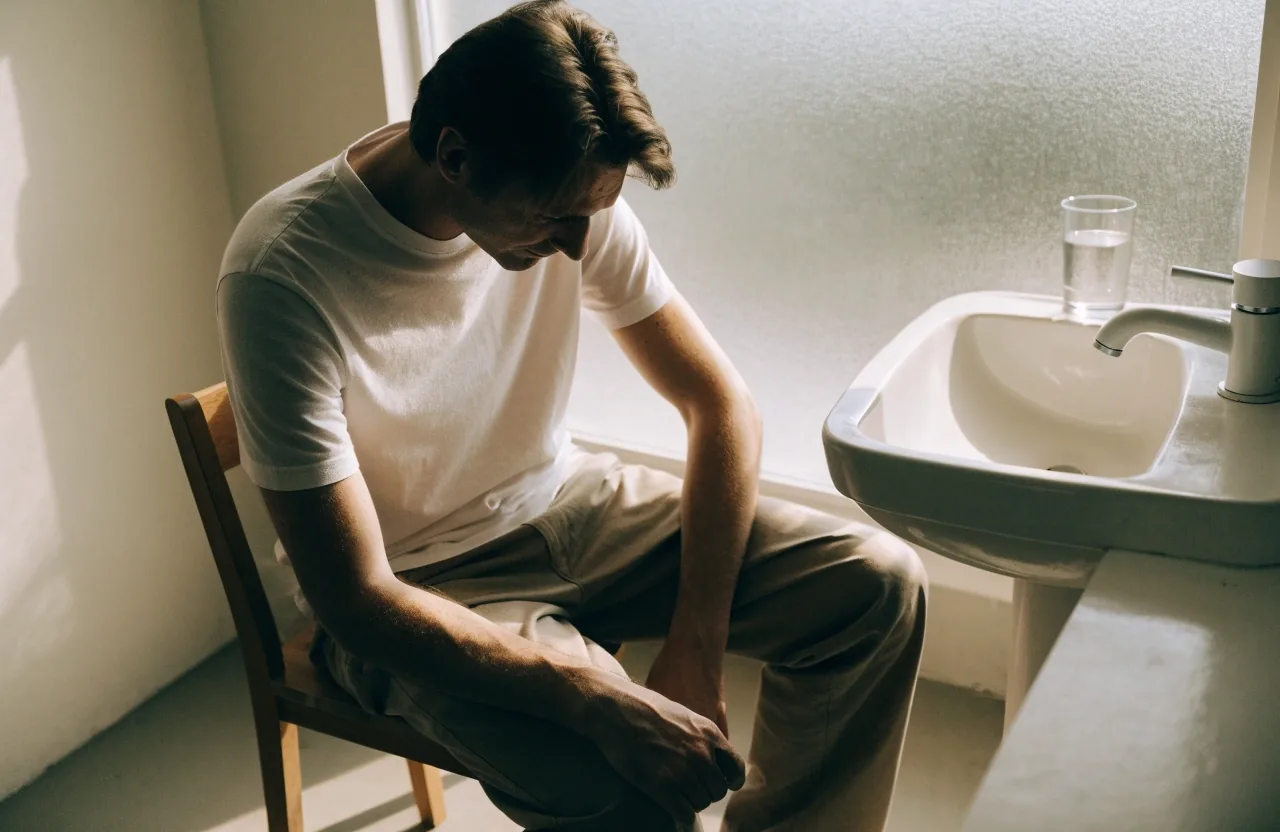
These muscles support the bowel as well as the bladder, which is why official guides sometimes use the image of stopping wind to help people locate them. That makes bowel routine relevant rather than separate.
Straining is the habit worth changing. Plenty of water, regular meal timing, and not delaying when you feel the urge all reduce the need to strain. If you are straining often, that is worth raising with a qualified professional rather than pushing through it.
Bladder habits in ordinary terms
Go when you need to, and do not make a habit of going just in case every hour. On the other hand, holding for very long stretches on purpose is not a training method either.
The middle path is unremarkable: respond to normal urges, keep fluids steady through the day, and avoid treating bathroom trips as a challenge. The muscles you are practicing support this system, and they work best when the routine around them is regular.
Steady fluids matter more than the total. Sipping through the day is easier to keep than a large amount in the evening, which tends to push everything into the night.
Keep it regular
- Respond to normal urges rather than waiting on purpose.
- Keep fluids even across the day instead of loading them late.
- Skip the habit of a scheduled trip with nothing behind it.
- Treat a long hold as a test you have to pass, and it stops being ordinary.
Movement, sleep, and the rest of the picture
Public-health pages increasingly frame pelvic floor work as part of everyday men's health, alongside movement, breathing, sleep, and routine. That framing is useful because it sets expectations.
A short daily exercise is one habit among several. Walking, reasonable sleep, and steady meals are not substitutes for the exercise, and the exercise is not a substitute for them either. They support each other without any single one carrying the whole load.
Walking
Ordinary daily movement keeps the hips and low back from stiffening into one shape, which makes sitting tall easier to hold.
Sleep
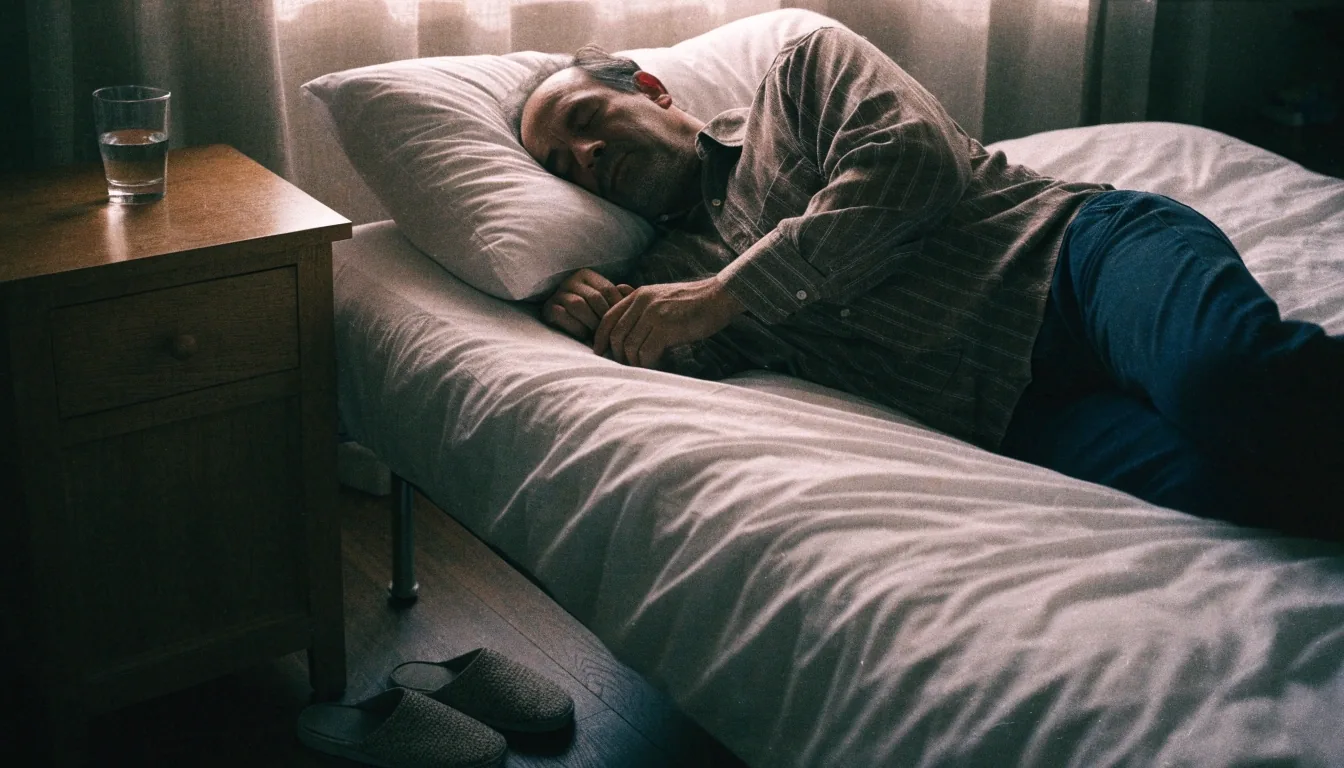
A regular bedtime is the plainest habit on this page. Tired days are the days most people skip their set entirely.
Meals
Regular meal timing helps the bowel routine described above settle, which in turn takes pressure off the habit of straining.
Routine
A short set at the same point in the day is easier to keep than a longer one squeezed in whenever there is time.
Habits that work against you
Two habits come up often. The first is overclenching, where you hold the muscles tight out of habit rather than on purpose. The second is rushing.
Holding your breath, straining, and pushing through a set all work against what you are trying to learn. If you notice either pattern, the fix is to slow down and reduce the effort, not to add more repetitions.
Overclenching
A tight hold that never releases. Check during the day whether the area feels relaxed at rest. If it does not, let it go before your next set.
Rushing
Fast reps with a held breath. Slower squeezes with a normal breath give you more to feel and correct.
Adding more reps
When a set feels wrong, the answer is usually less effort and more attention, not a longer set.
Ignoring the urge
Delaying when you feel the urge puts more load through the area than it needs.
Bringing it together
Building a daily check-in
Once a day, take thirty seconds to notice three things: how you are sitting or standing, how you are breathing, and whether the pelvic floor feels relaxed or clenched. That is the whole check-in.
It is not an exercise and it does not need a set or a count. Over weeks, the point is simply that you notice earlier when something has drifted, which makes it easier to correct before it becomes a habit you have to unlearn.
Common questions
Questions visitors ask most
Does posture really affect pelvic floor exercises?
It changes how much work the muscles do at rest and how easy the lift is to feel. Slouched sitting makes the squeeze harder to notice, which is why sitting tall first is a common cue.
Should I breathe into my belly during the exercise?
Breathe normally throughout. Belly breathing before a set is a common way to settle and to make the squeeze easier to isolate.
Is straining on the toilet related to these muscles?
The same muscles support the bowel as well as the bladder, so straining is a habit worth changing. Water, regular meals, and not delaying when you feel the urge all help reduce it.
How long before these habits feel normal?
It varies from person to person, and this page makes no promises about timing. What usually changes first is noticing — you catch the slump or the held breath earlier than you did the week before.
Where to go next
Put the habits next to the practice
This page covers the background. The exercises themselves, the positions you can use, and a routine you can keep are set out on the other pages, in the same plain language.
Nothing on this site is a promise about results. It is a description of how the practice is usually done, and what to check along the way.
About this resource
Plain guidance, no promises
Pelvic Floor Practice is an educational resource for men in Indonesia, covering pelvic floor and Kegel exercise routines, positioning, and everyday wellness habits in plain, instructional language.
Content is general information about exercise practice. It is not a substitute for advice from a qualified professional, and if something feels wrong or you are unsure whether a routine suits you, raise it with one.
Get in touch
- Jl. Cikini Raya No. 58, Menteng, Jakarta Pusat 10330, Indonesia
- +62 21 530 2811
- [email protected]
- Monday to Friday, 9:00 AM – 6:00 PM; Saturday, 9:00 AM – 1:00 PM