
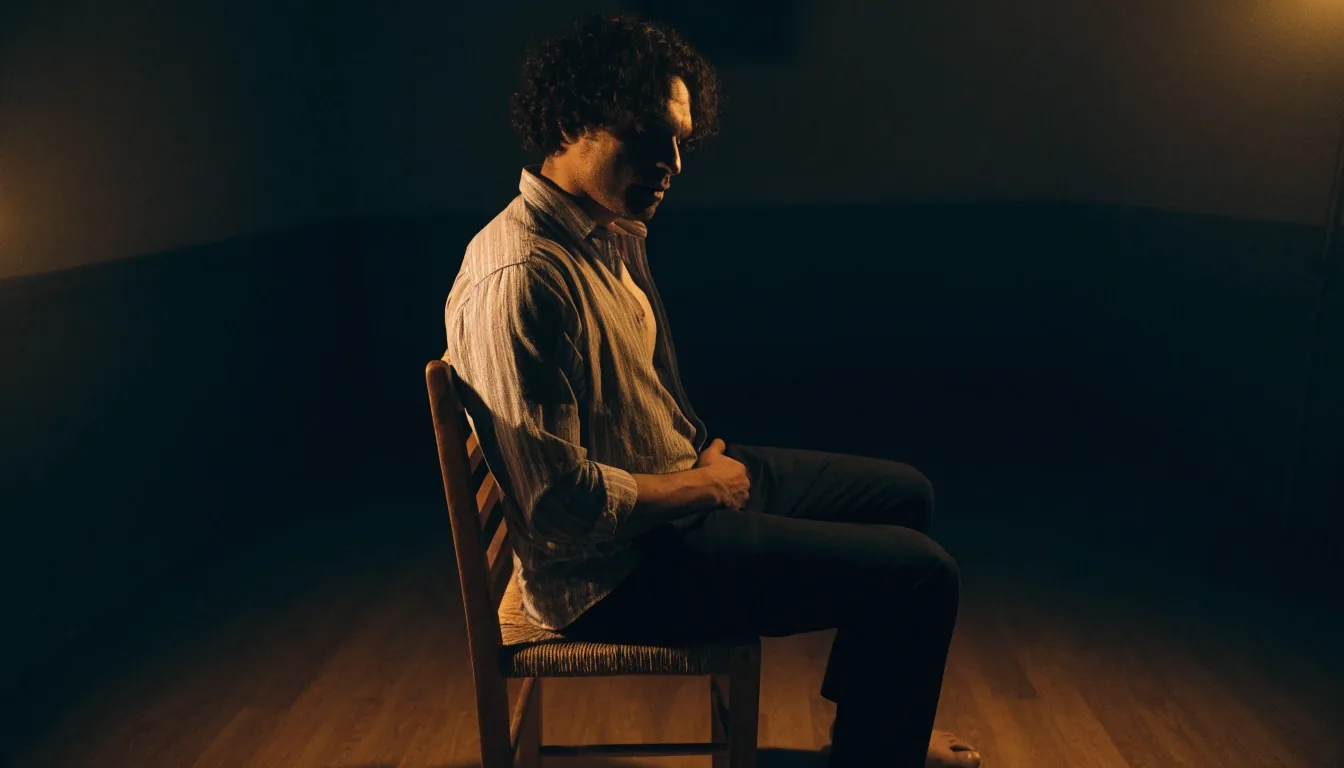
Educational resource only — no medical promises, no cures, no guarantees.
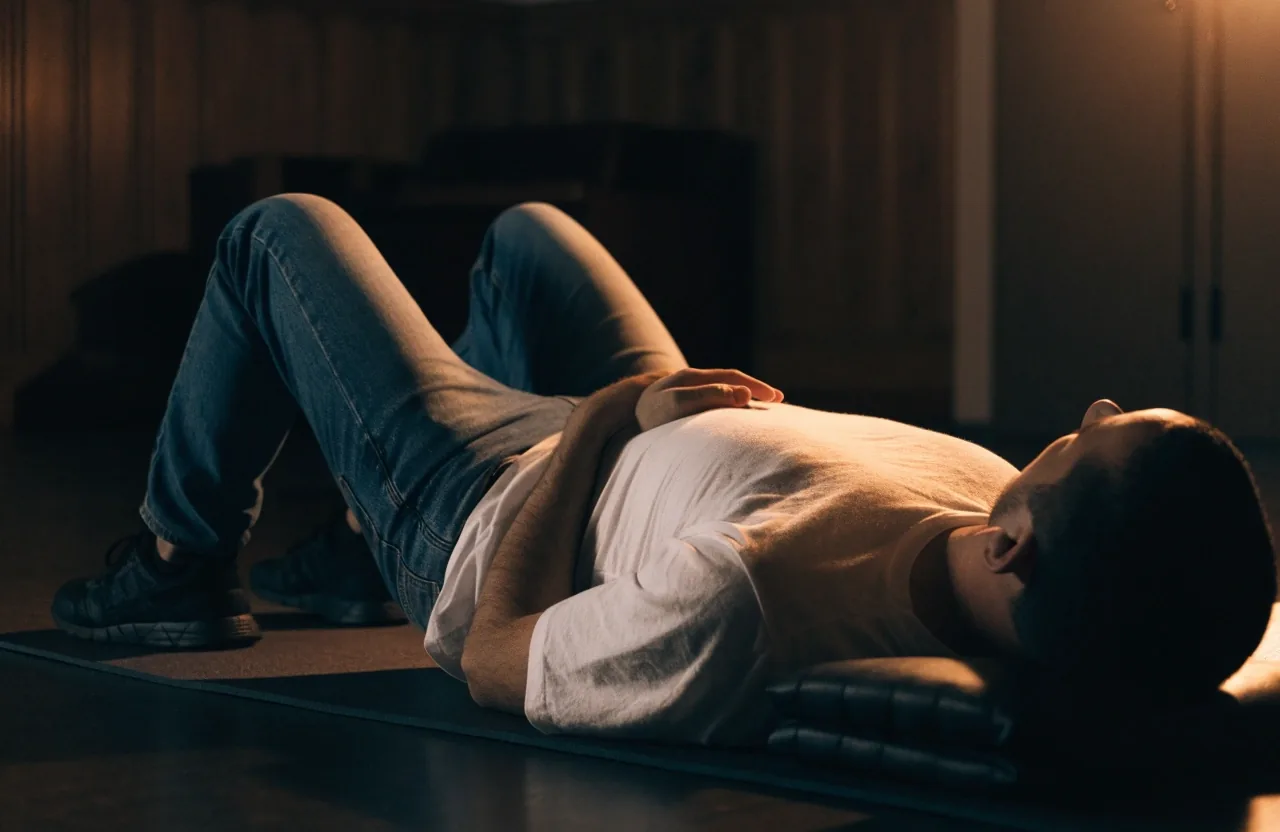
Man lying on a mat at night with knees bent and one hand on his stomach, checking his technique in warm low light

Pelvic Floor Practice · position guide

Choose Lying, Sitting or Standing

The position you practice in changes how easy it is to notice and control the squeeze. Start where your body has the most support and move upright only when the squeeze still feels clear.

Why position matters at all

When you lie down, your body has the most support and the least to manage. That makes it easier to feel a small movement in the pelvic floor and easier to notice when your stomach or buttocks join in. As you move toward sitting and standing, more of your body is involved in holding you up. The exercise does not change. The amount of background work does.

Most beginner guidance starts people in a supported position and moves them upright later. That order exists for a reason: the squeeze pattern is a coordination skill before it is a strength task, and coordination is easier to feel when nothing else is asking for your attention.

What changes as you go upright

  • Lying down — full support, the clearest feedback from a small squeeze.
  • Sitting — close to daily life, and posture starts to matter.
  • Standing — balance and gravity join the task.

The rules stay the same in all three. Only the difficulty changes.

Three starting points, three different jobs

Pick one and stay with it long enough to tell a clean squeeze from a brace. Each position below says what it is good for, how to set up, and what usually goes wrong first.

Man lying on his back with knees bent and a cushion under his knees in warm low light

Lying down

The learning position

Lie on your back with your knees bent and your feet flat. Let your lower back rest comfortably. Put one hand on your stomach so you can feel whether it tightens. Squeeze the pelvic floor gently, hold for a short count, and release fully.

This is the easiest position for checking technique because you can feel the difference between a clean squeeze and a brace. Many guidance pages recommend keeping the thighs, buttocks, and abdomen relaxed, and lying down makes that instruction easier to follow. Stay here for your first week if you need to. There is no prize for moving on quickly.

Sitting

Where the exercise meets your day

Sit upright on a firm chair with both feet on the floor. Squeeze and lift, hold briefly, release. Sitting is useful because it is close to how you use these muscles during normal activity, and because you can practice it almost anywhere without anyone noticing.

The catch is that sitting posture affects the squeeze. If you are slouched, it is harder to feel the lift. Sit tall first, then squeeze. If your chair is very soft, try a firmer one — support under you makes a difference.

Standing

Control under a little load

Stand with your feet about hip-width apart and your weight even. Squeeze and lift, hold briefly, release. Standing is the hardest of the three because your body is also working to keep you upright, and it is the closest to real daily movement.

That is why it appears later in most progressions rather than at the start. Do not rush to it. If the squeeze feels vague or your whole body tenses, go back to sitting for another week.

What stays the same in every position

Three things do not change. Position changes the difficulty, not the rules. If any of those three break down, the position is currently too hard, and the fix is to move back to an easier one rather than to push through.

  1. You breathe normally throughout

    Holding your breath hides the effort and makes the squeeze feel stronger than it is. If you catch yourself bracing, release, breathe out, and start the next repetition fresh.

  2. Thighs, buttocks and abdomen stay relaxed

    A squeeze that also clenches the buttocks or pulls the stomach in is doing more than you asked for. Keep the hand on your stomach as a check in the lying position and carry the habit upright.

  3. You release fully between repetitions

    The rest between squeezes is part of the repetition, not a pause you can skip. Give the muscles the same length of time to let go as you gave them to hold.

Building a progression you can trust

Move on when you can do a full set in the current position and still breathe steadily and release completely. If the next position feels unclear, spend another week where you are. Progress in this exercise is about control, not about speed, and there is no schedule you have to meet.

A simple path: one week lying down, one week sitting, then try standing. Treat the weeks as a description of order, not a deadline. Someone who spends three weeks lying down and arrives at a reliable squeeze has not fallen behind anyone.

Lying down

Start here. Knees bent, feet flat, hand on the stomach, short holds, full release.

First week

Sitting

Firm chair, both feet down, sit tall before the squeeze. Practice it in ordinary moments.

Next week

Standing

Hip-width stance, even weight, short holds. Come back to sitting if the squeeze blurs.

When ready
Man standing with feet hip-width apart beside a firm chair in warm low light

Standing with even weight. A firm seat nearby makes the return to sitting easy when a set stops feeling clear.

Adjusting for your own body

Bodies differ, and so do the small adjustments that help. Some men find a pillow under the knees makes lying down more comfortable. Some find a chair with a firm seat helps them notice the lift while sitting. Some need to shift their weight slightly forward while standing. Treat these as reasonable variations, not as failures of technique.

A few adjustments are worth trying before you decide a position does not suit you. A folded towel under the hips for lying down. Both feet planted flat rather than tucked under the chair. Shoes off for standing so you can feel the floor. Small changes to what you are standing or sitting on often change what you can feel.

If a position causes discomfort that does not go away when you stop, leave that position out and use another one. There is no rule that says all three have to be part of your practice. Two positions you can do calmly are worth more than three you dread.

Common questions about positions

Short answers to what visitors ask most before they start. If your question is not here, the fuller question page covers the wider practice.

Which position should a beginner start with?

Lying down with knees bent is usually the easiest place to learn the squeeze and check that your stomach and buttocks stay relaxed.

Can I do these exercises while sitting at work?

Yes, sitting is one of the standard positions. Sit upright on a firm chair first, because a slouched posture makes the lift harder to feel. Practising at your desk is fine as long as you are not holding your breath.

Why is standing harder?

Standing adds balance and gravity to the task, so your body is doing more at the same time. It usually comes last in a progression for that reason.

Do I have to move through all three positions?

No. If one position works for you, you can stay with it. The progression is a common path, not a requirement.

Where to go next

Pick your position, then keep the count

Choose the position you can hold with a steady breath and a full release, and stay there until the squeeze feels reliable. Everything else on this site supports that one habit: the basic squeeze, a home routine you can repeat, and the everyday care that keeps practice realistic.

Before you start a set

  • Feet supported and weight even
  • Breathing normally, not holding
  • Buttocks and stomach relaxed
  • A full release between repetitions

If one of these slips, move to an easier position for the rest of the set.

How to ask about your own practice

This page explains positions in general terms. If you want to talk through how a position fits your own routine, the details below are how to reach us during working hours.

Visit or write to us

Jl. Cikini Raya No. 58, Menteng, Jakarta Pusat 10330, Indonesia

Working hours

Monday to Friday, 9:00 AM – 6:00 PM; Saturday, 9:00 AM – 1:00 PM

The content on this page is general information about exercise positions. It is not medical advice, and nothing here promises a particular result. Speak with a qualified professional about your own situation.